Choose Bedroom Art with the Person Sharing the Room
Choose bedroom artwork through a shared shortlist, discussing the ordinary views each person has and trying a reversible layout before buying or fixing a new arrangement.
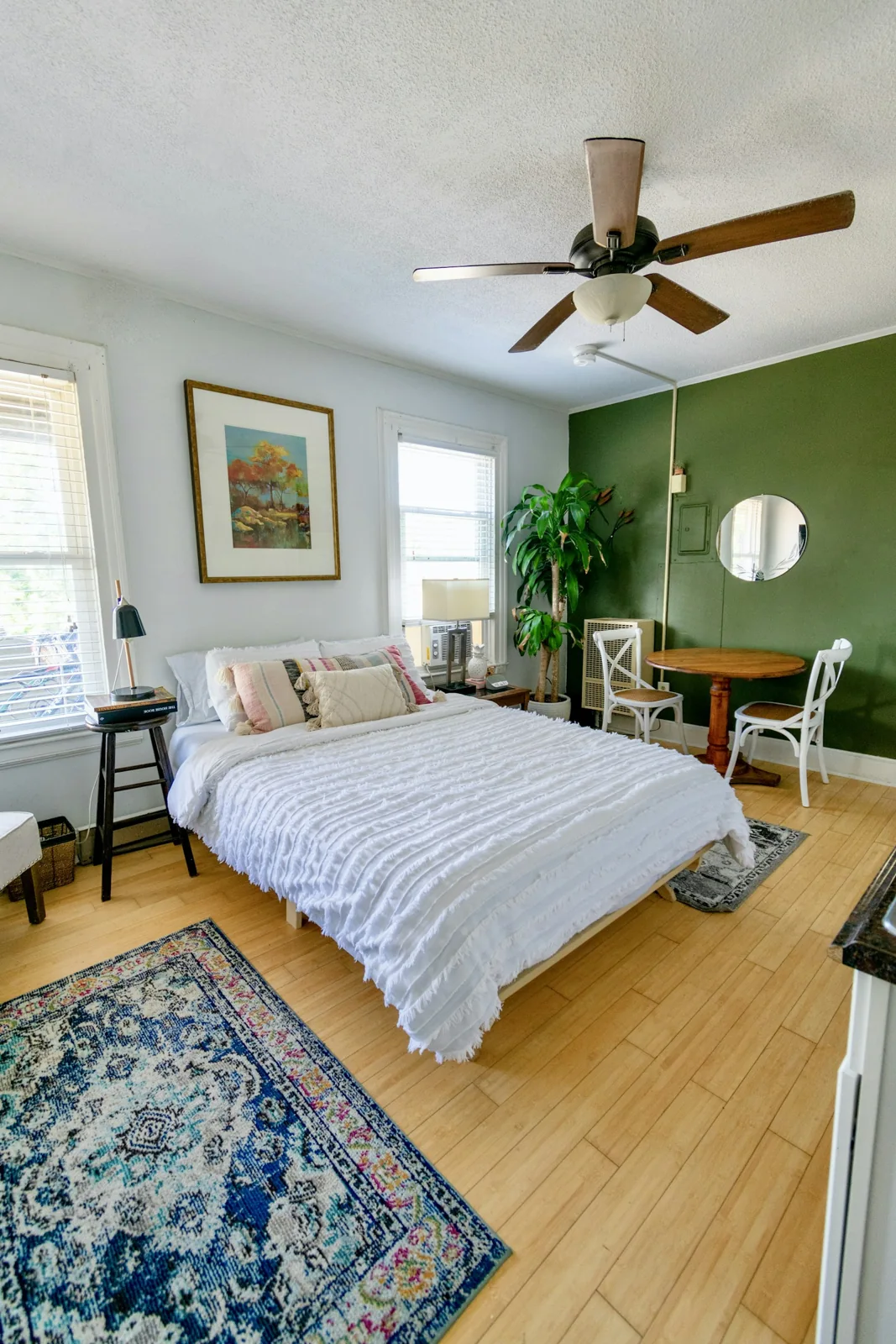
Licensed editorial lifestyle photography. Images illustrate the setting; pictured items are not product endorsements.
Bedroom art is often chosen from a single photograph of the bed wall. A shared room has more than one ordinary view and more than one person's preferences. Before choosing frames, agree on what you both want the space to feel like and which existing pieces matter. The conversation can be small and specific rather than a vote on an entire decorating style.
Begin with what each person sees
Look at the room from the doorway, the bed and the places where you dress or put things away. A wall that dominates one person's view may be barely visible from the other's side. Describe the actual positions rather than arguing over whether a particular picture is objectively calming or too bright. Those impressions depend partly on where and how the room is used.
Identify pieces that have personal significance. One person may care about a small print because of its story, while the other is mainly considering colour. Discussing these different reasons often makes a compromise easier. A meaningful work does not need to become the largest piece in the room to have a clear place.
Make a short shared shortlist
Choose a few possible combinations using pictures you already own before shopping. Include an option with less on the wall. Compare the group with retained bedding, furniture and curtains, keeping those elements stable while discussing the art. If everything changes in every proposal, it becomes difficult to identify which decision either person actually prefers.
The movable bedroom colour sample approach is helpful when a new wall colour is also being considered. Keep that experiment separate from a commitment to artwork. A temporary colour reference can clarify a conversation without requiring an immediate room makeover.
Try the arrangement reversibly
Use paper outlines or another suitable temporary planning method to compare scale and spacing, taking care with wall finishes and the household's conditions. Follow appropriate installation guidance for the final work; a paper layout does not establish that a fixing is suitable. Consider how doors, lights and furniture relate to the proposed group.
For a larger grouping, the frame-group planning guide explains why checking the whole outline is more useful than moving one frame repeatedly. In a bedroom, also consider whether either person finds the arrangement visually busy from the position where they normally rest.
Let the agreement be modest
You might agree to keep one existing picture, postpone a purchase or try a smaller arrangement first. These are complete decisions, not failed designs. Record the agreed next step so that one person does not interpret a shortlist as permission to buy every item. A room shared comfortably is a stronger result than a perfectly matched wall that one occupant never wanted.