Keep a Pantry Jar’s Current Identity Clear
Keep a Pantry Jar’s Current Identity Clear. Concrete choices for retained rooms, useful belongings and ordinary time at home.
Licensed editorial lifestyle photography. Images illustrate the setting; pictured items are not product endorsements.
Identify the actual current contents
A pantry jar label should describe the actual current contents rather than preserve the identity of a previous group. Begin with accurate product information and the container's intended use. Keep any relevant original instructions, dates and other necessary details through their actual requirements rather than treating a decorative label as a replacement.
This guide organises identification, not a food-storage method or a guarantee of safety. Follow the real food and container guidance and seek appropriate advice where a specific suitability question needs it.
Keep source information connected
Preserve the relevant product identity and supplied information in an appropriate arrangement. Similar-looking dry ingredients or containers should not be assigned names from appearance alone. If identity is uncertain, keep that question explicit and resolve it through suitable information rather than guessing to complete the shelf.
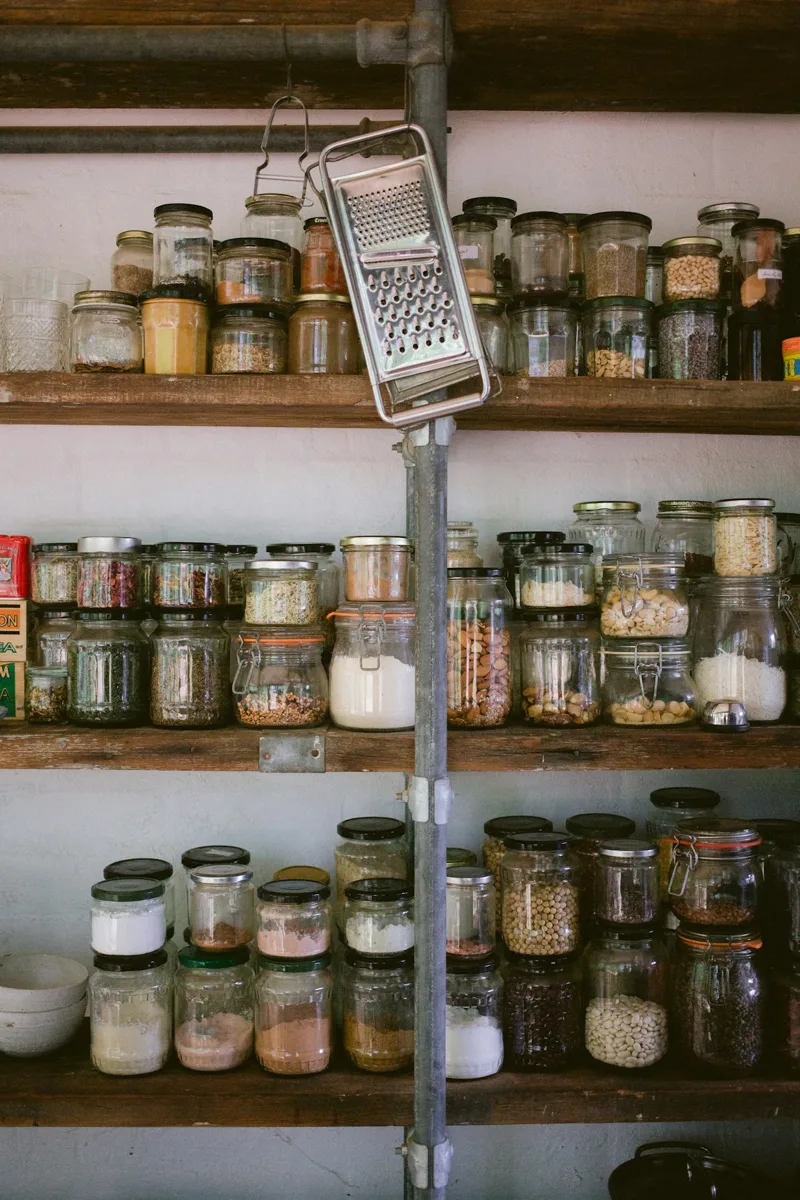
The pantry photograph illustrates jars in a retained kitchen. It does not establish another ingredient's identity, freshness or appropriate storage conditions. Accurate labels begin with known contents, not the visual impression of a tidy group.
Choose readable proportionate wording
Use a clear current description understandable to the responsible household users. Keep essential information available without inventing unsupported claims about the contents. A small label can point to the relevant source details where that arrangement is appropriate rather than attempting to reproduce everything decoratively.
Our open-cupboard label guide considers the ordinary reading view. Keep the actual door, shelf and user's needs in mind instead of judging the label only in a close photograph.
Update through the real change
When the contents change, revise the relevant label and preserve the new product's actual information. Do not allow an attractive old category to remain current beside different contents. Follow all relevant container and product requirements before treating another use as appropriate.
The bounded cupboard guide keeps groups specific. One accurate current shelf can be more useful than a complete matching label set whose meanings are no longer reliable.
Keep uncertainty separate from readiness
Give any unidentified or otherwise unresolved item its appropriate next step rather than placing it among ordinary ready choices. A neat jar does not answer a condition, ownership or suitability question. Where another adult shares the task, explain the actual status and responsibility clearly.
What if a label cannot accommodate necessary information? Choose an appropriate reference arrangement through the actual requirements instead of omitting the details for appearance. What if a familiar jar has changed contents? Treat its identity as a new accurate task. A considered pantry label keeps the real product legible without claiming that decoration establishes food suitability.
Remove obsolete active references when they no longer describe the group. The next household user should be able to distinguish the current source information from an earlier product that has already left the shelf.