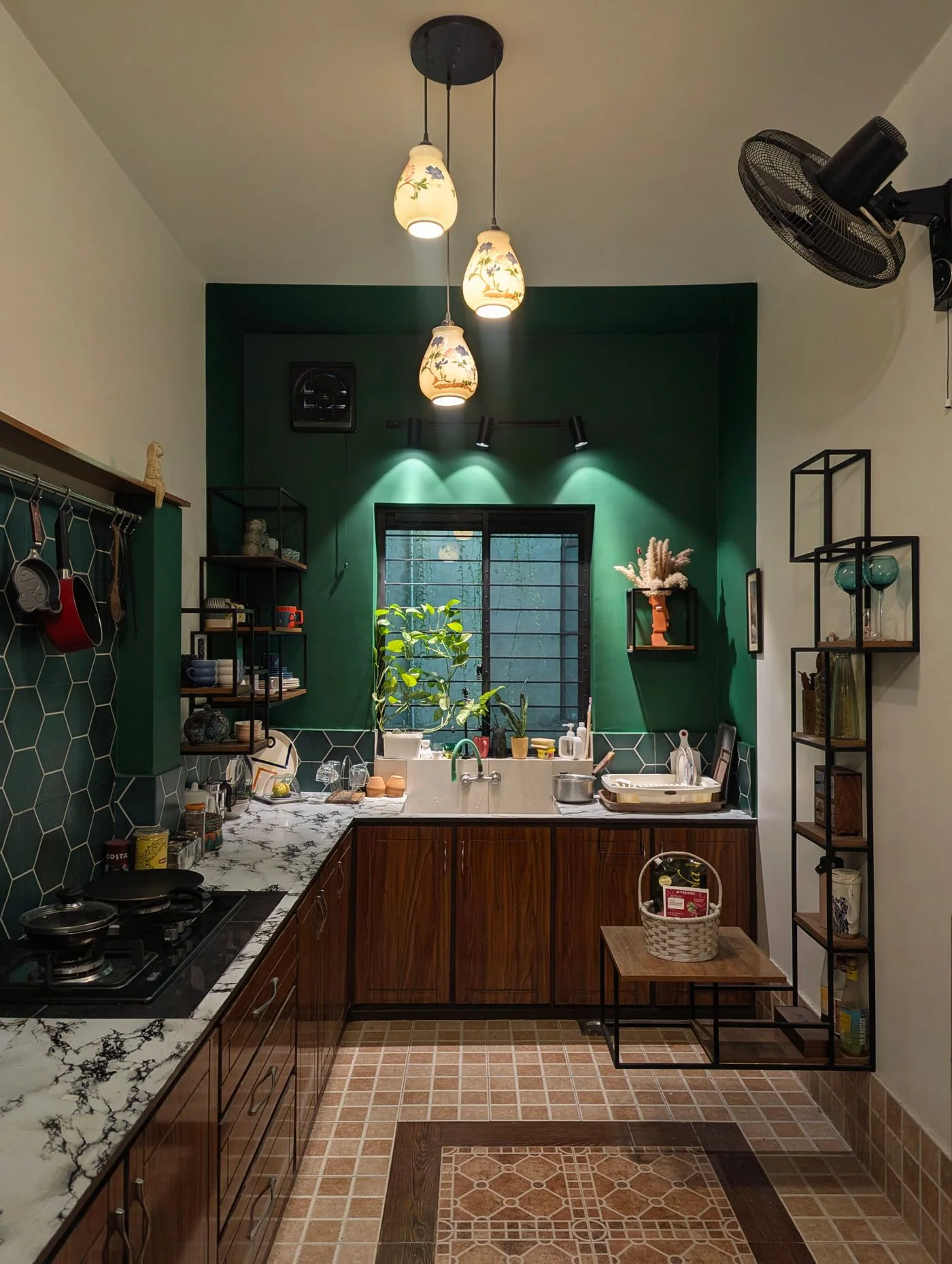
Read Kitchen Cupboard Labels With the Door Open
Place useful labels where the actual person retrieving an item can see and understand them.
Licensed editorial lifestyle photography. Images illustrate the setting; pictured items are not product endorsements.
Choose a cupboard with a repeated question
A cupboard label is useful when it resolves genuine uncertainty. Choose a position where household members repeatedly search or ask what belongs there. Do not label every kitchen surface simply because a complete system looks appealing.
Review the actual contents first, following each item's storage requirements. Remove unrelated decisions from the ready group and identify what the cupboard serves now. A precise label cannot rescue a shelf whose contents change every time something has no other home.
Look from the retrieval position
Open the door and stand where the contents are normally reached. Check which part of the shelf or container is visible. A label neatly centred on a closed box may disappear when another item sits in front of it.
Include the people actually sharing the kitchen and any relevant access needs. Use wording and a position they can understand. A fashionable tiny script is less useful than clear identification when the label's purpose is practical retrieval.
Keep product identity intact
Preserve necessary original labels, instructions and other information. A storage category name should not replace a product's essential identity or handling guidance. Decanting needs its own appropriateness check; matching containers are not a requirement for clearer cupboards.
Keep food, equipment and cleaning materials under their actual storage requirements. A broad label such as kitchen supplies should not encourage incompatible items to share a position. Choose a coherent suitable group rather than a decorative category that means several different things.
Choose appropriate label materials
Check that any label or attachment method suits the actual container, surface and conditions. Follow relevant care information and avoid damaging a rented or delicate surface for the sake of a temporary organisation idea.
Our cupboard guide supports the initial review. The kitchen zones guide helps keep labels connected to where tasks happen. The naming system should follow the useful arrangement, rather than force equipment into inconvenient positions.
Review returns as well as searches
After ordinary use, notice whether items return to the intended group. If they do not, check the group's boundaries, available space and retrieval route. A clearer label may help uncertainty, while an inconvenient shelf may need a different arrangement.
Change obsolete labels when the contents genuinely change. Keep the system small enough to maintain without another lengthy kitchen project. Our basket label guide offers related examples for collections that serve one task rather than one material type.
Cupboard label questions
Must every shelf have a label? No. Use labels where they resolve uncertainty for the actual household.
Can the label replace packaging information? No. Keep all necessary product identification and instructions accessible.
What if the same items still go missing? Review the storage position and who uses it before making the label larger or buying more containers.