Give a Yellow Chair a Quiet Surrounding Group
Give a Yellow Chair a Quiet Surrounding Group. Concrete choices for retained rooms, useful belongings and ordinary time at home.
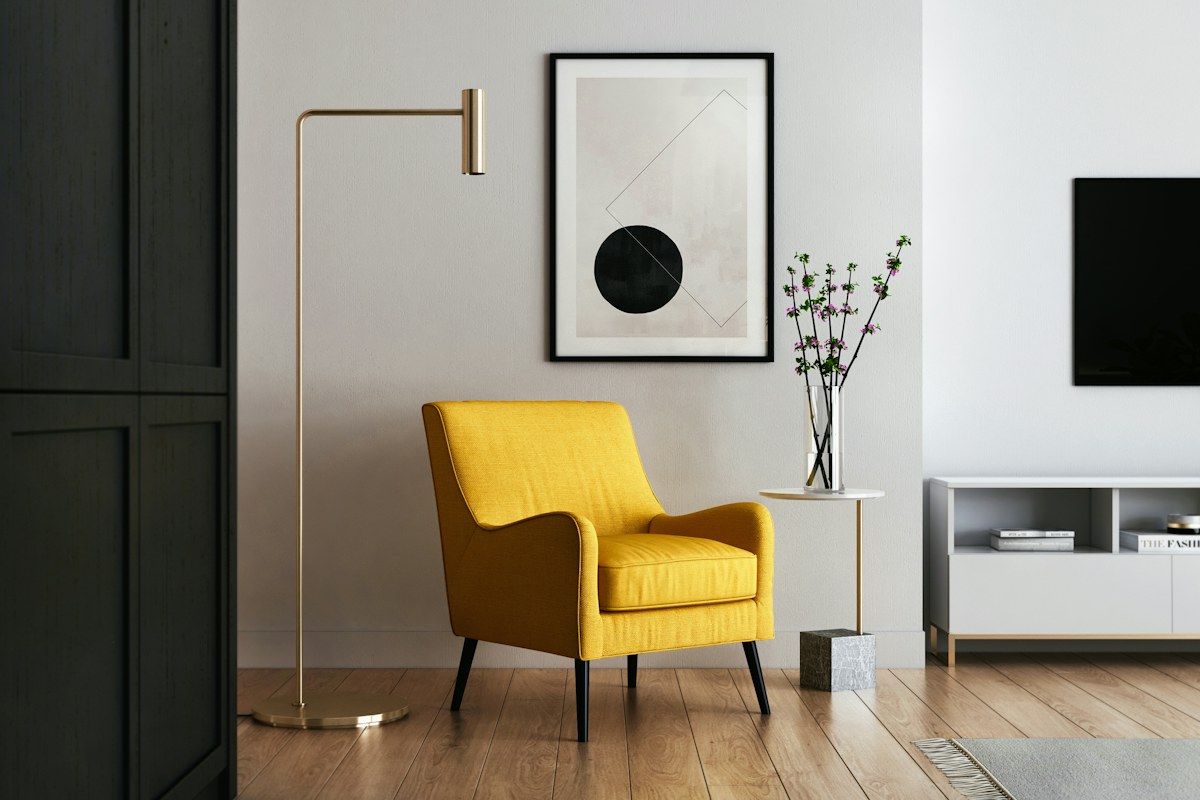
Licensed editorial lifestyle photography. Images illustrate the setting; pictured items are not product endorsements.
Keep the chair as the colour anchor
A yellow chair can give a room a clear colour feature while the surrounding objects remain quieter. Begin with the retained chair and the actual activity it serves. Consider the person, furniture requirements and ordinary room use before selecting decorative companions.
The photograph illustrates a yellow upholstered chair beside a lamp and artwork. It does not establish the dimensions or suitability of another furniture group. The useful comparison belongs to the actual pieces and room.
Name the nearby task
Decide what the chair's ordinary use genuinely requires nearby: perhaps an appropriate surface for a current book or another suitable object. Keep the group modest and choose through the real furniture and item requirements. A side table should have a clear task rather than be added because the chair looks isolated in a photograph.
Our reading corner guide begins with an existing occupied room. Use that practical foundation before assembling a new decorative group around one retained colour.
Compare quiet tones without demanding matches
Look at the chair with retained materials in ordinary light. A quiet neutral, familiar wood or small repeated tone may provide the relationship you prefer. Exact yellow repetition is optional, and the room does not need another matching accessory automatically.
If the surrounding group feels visually busy, remove one optional detail and compare again. A single change makes the chair's contribution easier to understand than replacing the table, lamp and textiles simultaneously.
Keep the room’s wider use visible
Consider the actual route, neighbouring furniture and household requirements. A decorative arrangement should support the occupied space rather than require ordinary tasks to move around it. Follow relevant product information and obtain suitable guidance where a practical placement question needs it.
The everyday layout guide keeps activities central. A quiet group beside the yellow chair should be judged through that real use as well as its appearance.
Choose a repeatable modest arrangement
Retain the suitable objects with genuine roles and give unrelated pieces appropriate destinations. A considered corner does not need to remain frozen as a photograph; it should be understandable when the chair is occupied and after the activity ends. Keep actual care stages distinct from tidy appearance.
What if the yellow seems too dominant for your preference? Compare the retained surrounding tones before buying another colourful object to balance it. What if the chair's task changes? Revisit the nearby group through the new activity. A considered yellow-chair arrangement lets colour be clear while the rest of the room stays useful.
Record the specific retained textiles or materials that made the comparison work if a later purchase is considered. A broad label such as neutral companion may conceal tones and textures that create quite different relationships.