Give One Wardrobe Shelf a Clear Destination
Give One Wardrobe Shelf a Clear Destination. Concrete choices for retained rooms, useful belongings and ordinary time at home.
Licensed editorial lifestyle photography. Images illustrate the setting; pictured items are not product endorsements.
Choose one actual shelf
A wardrobe shelf becomes easier to use when it has a clear current destination rather than a general role for anything that does not hang. Begin with one retained shelf and the actual household group it needs to serve. Check the furniture's usable dimensions and relevant requirements before planning contents.
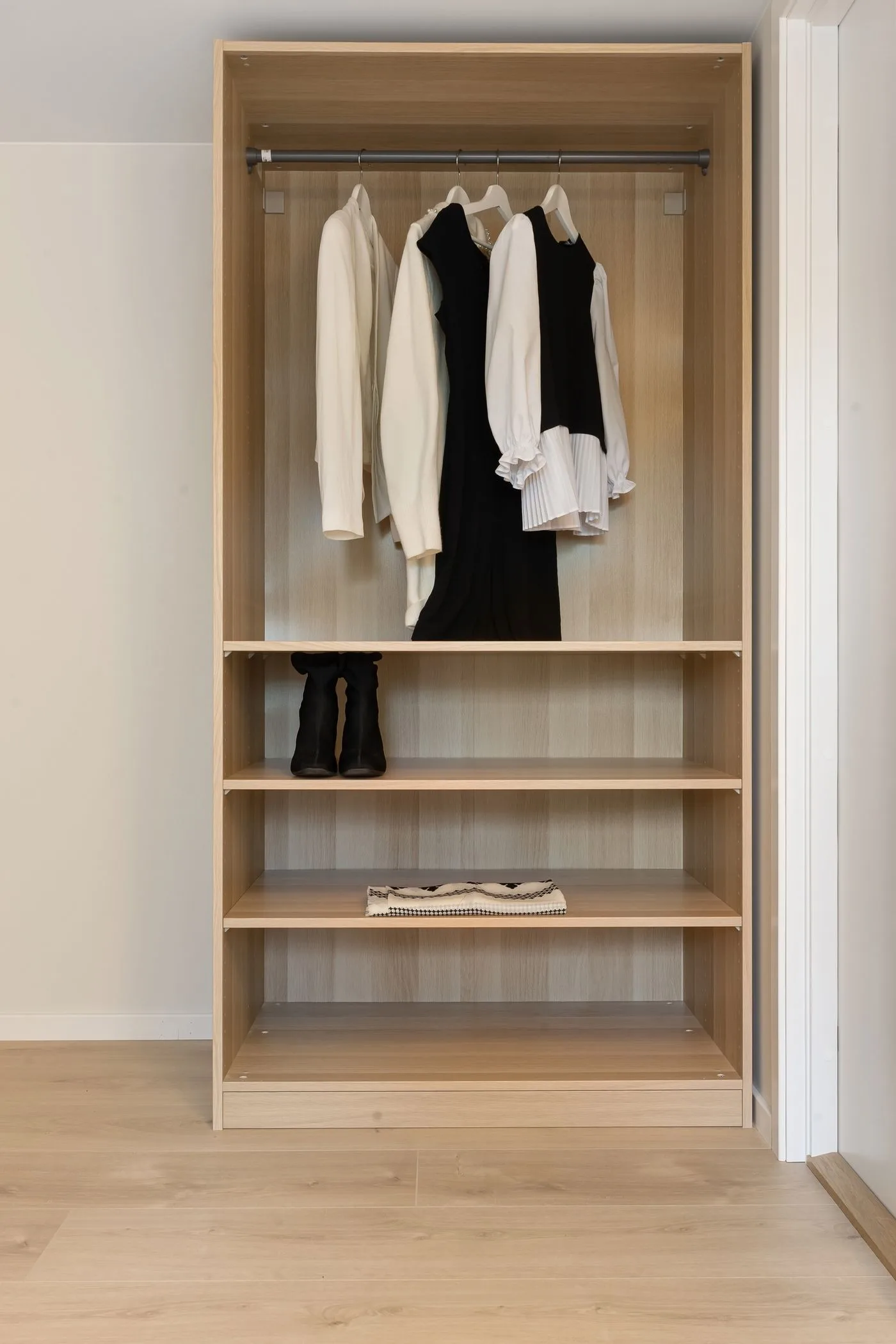
The photograph illustrates a wooden wardrobe with clothing and shelves. It does not establish another unit's internal space or suitability. Keep the comparison tied to the real furniture and products.
Name the contents through real use
Choose a modest suitable group such as current ready folded tops where that arrangement suits their actual guidance. Do not combine unrelated garments merely because their colours look coordinated. Keep product storage needs and individual care stages distinct.
Our current household cupboard guide begins with the retained group's real role. A wardrobe shelf can use the same modest principle without becoming a complete inventory of every garment owned.
Leave an appropriate return arrangement
Consider how the actual ready item is retrieved and returned through its relevant requirements. A tightly filled shelf may look neat while making ordinary use cumbersome. Do not force unfamiliar folds or stacks simply to preserve the visual display.
If the current group does not fit appropriately, reconsider its size or destination before buying another divider. An organiser should follow the contents and usable space rather than be expected to create suitability where the real objects do not fit.
Keep unfinished garments separate
Give items awaiting attention a clear appropriate next action. A folded appearance does not establish readiness, and a shelf label should not conceal an unanswered product question. Explain the actual stage where another adult shares the return task.
The small-home laundry guide keeps care and return connected. The wardrobe shelf belongs at the genuine end of that sequence rather than serving as a hiding place for unresolved work.
Review the shelf after ordinary use
Notice whether the agreed role remains understandable when the week changes. If unrelated pieces repeatedly arrive, identify their missing destination instead of adding another container automatically. Keep the original shelf's role clear or revise it deliberately through the actual household needs.
What if several people share the cupboard? Agree the relevant group and return arrangement rather than relying on a private colour order. What if a garment requires different storage? Give it a suitable destination without forcing it into the shelf category. A considered wardrobe shelf makes one current group legible and lets actual product requirements shape the organisation.
Keep any useful label accurate when the contents change. An old category can mislead another person even when the shelf still looks tidy, especially if the same space now serves a different stage or recipient.