Choose a Side Table for a Deep Sofa
Compare the seat, arm and ordinary drink position before choosing a table by its diameter.
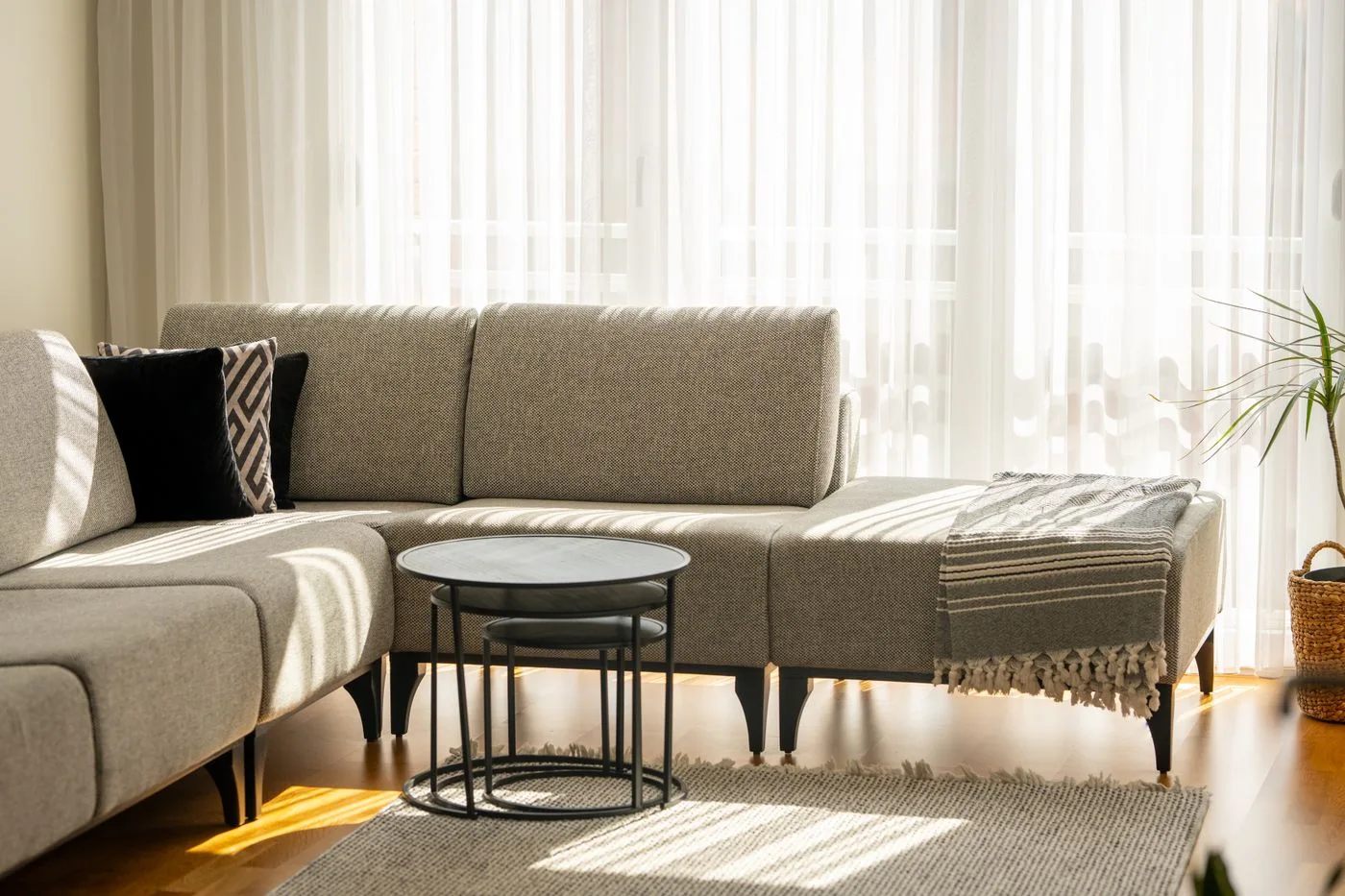
Licensed editorial lifestyle photography. Images illustrate the setting; pictured items are not product endorsements.
Sit before measuring
A deep sofa changes the relationship between the sitter and a nearby table. Sit as you usually would, with the ordinary cushions in place, and notice where a drink or book can be reached comfortably. The table's height alone does not describe that relationship.
Keep the actual sofa's use and movement requirements in mind. If it has a reclining or adjustable part, include that movement under the manufacturer's instructions. A table should not be wedged into a gap that disappears when the seat changes position.
Measure the useful top
Compare the surface available for the items used there, including mug handles and a suitable coaster where needed. A broad-looking top may have an uneven edge, raised decoration or a small usable centre. Inspect the actual product information before assuming the whole diameter is functional.
Keep the intended task modest. A side table for one seat need not become a bookcase, lamp stand and household tray simultaneously. If several objects are essential, separate their roles rather than balancing them around the edge.
Check the base and route
Look at the table's complete footprint and intended setup. A projecting base can intrude into the walking route even where the top appears clear. Consider the position of feet when somebody rises from the sofa and where another person passes.
Our living-room guide helps assess the larger route. Keep necessary access clear and follow the table's actual stability and load requirements. A product photograph cannot establish that a narrow table suits every floor or household.
Compare care with actual use
Read material and finish guidance for the proposed table. Consider the drinks, cleaning and daily handling it will encounter. Do not assume a stone appearance means the surface has the same care requirements as another stone or imitation material.
Choose protection appropriate to the actual products where required. A finish that demands more attention than the household wants may be a poor everyday match, even if the colour is ideal. Compare that maintenance cost with the visual appeal before purchasing.
Try the position through an evening
Where practical, use an appropriately stable existing surface to understand the position before buying a replacement. Do not balance a drink on an improvised unstable object merely to test a measurement. Notice reach, movement and the route while the room is occupied.
Our cushion guide offers related decisions about the sofa itself. Keep the table choice connected to everyday use rather than compensating for an unsuitable position with more accessories.
Side table questions
Must the table reach the sofa arm? Use actual reach and product requirements rather than a universal height rule.
Can a small stool serve the same job? Only where its intended use, stability, surface and load requirements suit that task.
What if the table is constantly moved? Check whether it obstructs a route or serves several conflicting jobs before buying a heavier version.