Give a Dining Centrepiece a Clearing Position
Choose the arrangement and its temporary home before placing a permanent display on the dining table.
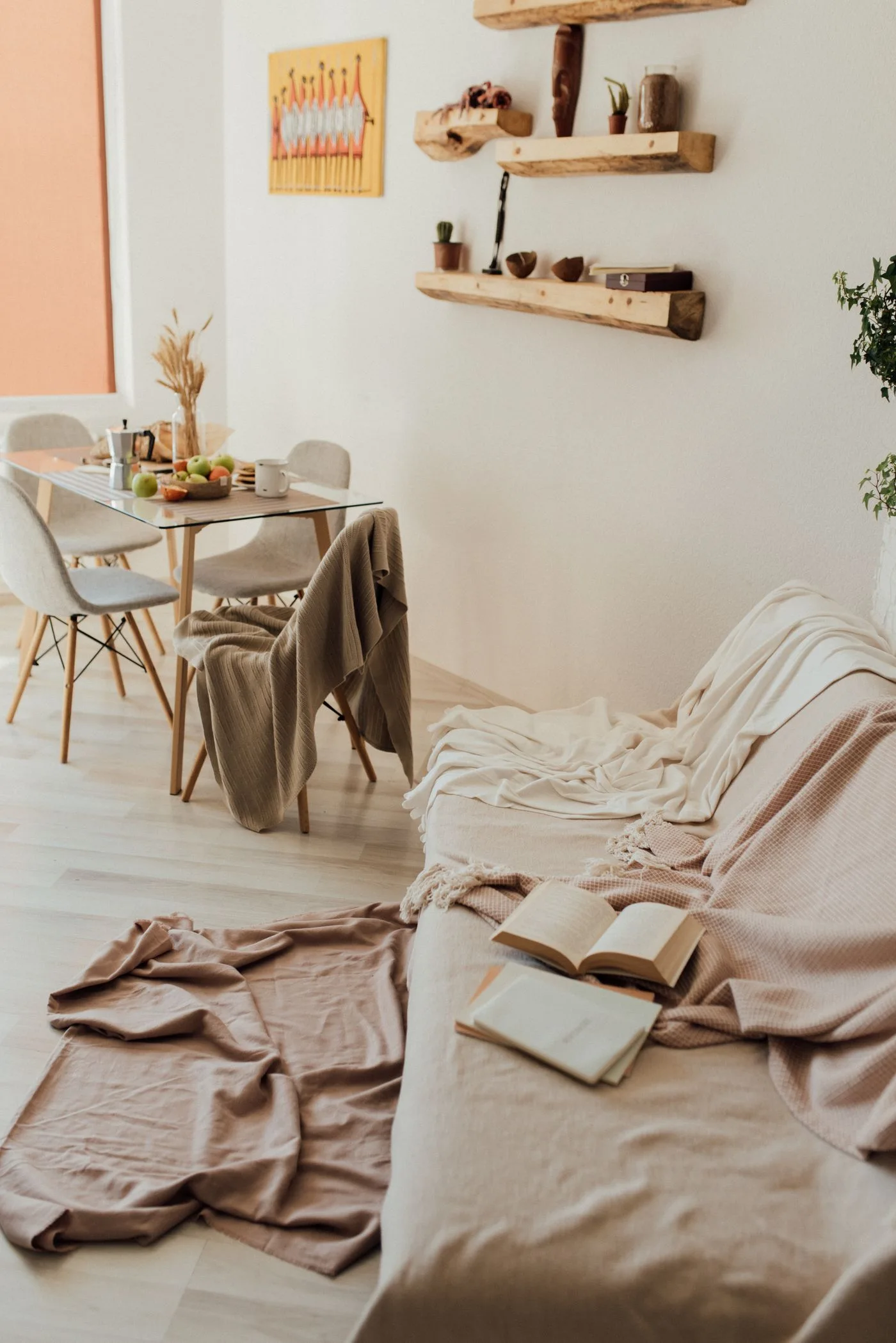
Licensed editorial lifestyle photography. Images illustrate the setting; pictured items are not product endorsements.
Measure the occupied table
A dining table changes when chairs are occupied, plates are placed and serving dishes arrive. Set out an ordinary meal arrangement before choosing the centrepiece's footprint. Include the reach needed between people rather than measuring only the empty tabletop.
Decide whether the display is for everyday enjoyment or a particular occasion. Those purposes may need different scales. A large arrangement can be perfectly appealing while still needing to move before dinner; the important part is knowing where it can go.
Choose a manageable arrangement
Consider the full dimensions, weight and handling requirements of the actual objects. A tray may help some collections move together, but it must be suitable for the contents and surface. Do not assume a decorative tray is designed to carry every heavy or delicate display.
Keep relevant product instructions in view, including those for flowers, containers or any equipment. Avoid combining objects whose needs conflict just because their colours work together. The arrangement should remain practical after it leaves the centre of the table.
Reserve an appropriate waiting place
Choose a suitable surface or storage position for the display during a meal. Check that it fits there completely and does not block the room's route. Include the movement between the table and the waiting place.
Our small dining guide considers the wider room. The flower guide helps with a modest floral option. Neither requires keeping the whole decorative arrangement in place while the table serves another task.
Keep conversation and serving clear
Check the arrangement from ordinary seated positions. Notice whether it interrupts views across the table or crowds the space needed for serving. There is no universal height or diameter that suits every table, chair and household.
If the display must move during every course, reduce its scope or clear it before people sit down. A smaller everyday arrangement and a separate occasional display may be more useful than trying to make one elaborate centrepiece suit every meal.
Make the return optional
After the meal and appropriate cleaning, return the display only if the table is ready for that use. It may need to remain clear for homework, a project or another household task. Keep the centrepiece's care requirements separate from the urge to restore a styled appearance immediately.
Our table setting guide supports a welcoming meal without excess equipment. Review the arrangement after ordinary use and keep the version that provides enjoyment without making each table change unnecessarily complicated.
Centrepiece questions
Must an everyday centrepiece stay in place during meals? No. Plan a suitable clearing position if the table needs the space.
Can a tray solve every movement problem? Only where its intended use and dimensions suit the actual collection and handling requirements.
What if there is nowhere to move the display? Choose a smaller arrangement or another appropriate display location before adding a new surface.