Give a Console Table a Retained-Room Role
Give a Console Table a Retained-Room Role. Concrete choices for retained rooms and ordinary use.
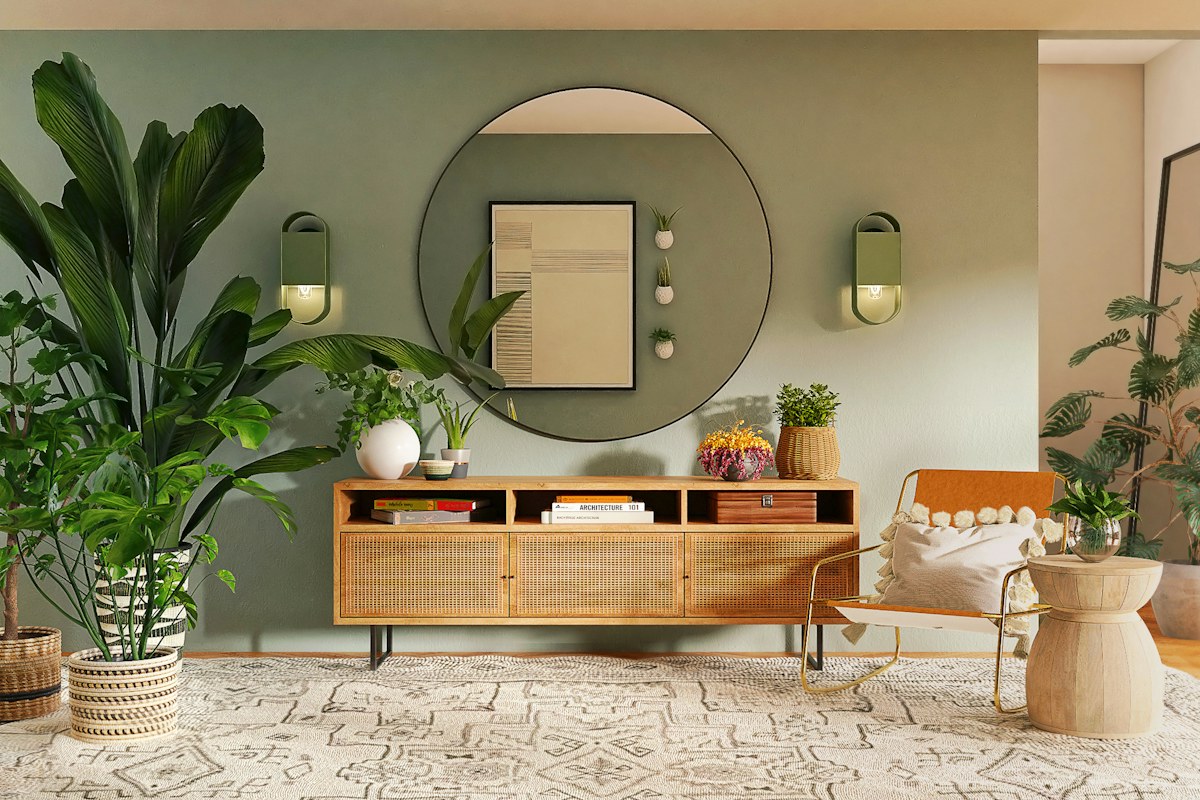
Licensed editorial lifestyle photography. Images illustrate the setting; pictured items are not product endorsements.
Choose the role before the display
A console table can support a real room task without becoming a general destination for every small object. Begin with the retained furniture and the actual activity it needs to serve. The role may involve an ordinary household handover or a modest personal display, but it should be specific enough to guide what belongs there.
The photograph illustrates a wooden console beneath a round mirror. It does not establish the dimensions, capacity or appropriate placement of another product. Check the real furniture's requirements before planning its contents.
Name the objects that genuinely belong
Identify the suitable retained pieces needed for the chosen role. Keep private belongings handled through their actual responsibilities and avoid assuming a shared surface is an appropriate home for every document. A decorative object can remain part of the arrangement where it contributes a deliberate preference.
Our personal object display guide keeps one meaningful piece connected to a real room. Use that modest approach rather than filling the console simply because its surface appears unoccupied.
Compare the surrounding relationships
Look at the actual console with the retained mirror, wall colour and nearby furniture in ordinary light. Notice whether the group feels coherent to you. A matching material is optional; a clear distinction can be equally deliberate where that suits the room.
Keep product suitability separate from visual balance. A pleasing photograph does not answer fixing, placement or furniture requirements, so seek the appropriate information where the actual arrangement raises a practical question.
Protect the current task from overflow
Choose another suitable destination for unrelated objects rather than allowing them to collect beside the intended group. If temporary items do arrive, identify their actual next action. A console's useful role becomes harder to understand when every paper and accessory is treated as current merely because it is visible.
The busy-morning entrance guide starts with real household use. A console can support that activity where appropriate without being required to carry every entrance task at once.
Review after ordinary use
Observe whether the agreed role remains clear through a normal household cycle. If the same unrelated group repeatedly appears, identify its missing destination rather than replacing the display or buying another organiser automatically. The useful adjustment follows the real task.
What if the console serves several people? Agree the relevant role and return arrangement rather than relying on a private decorative order. What if the intended group is unsuitable for the furniture? Choose another appropriate destination through the actual requirements. A considered console arrangement gives retained furniture a useful place in the room and leaves its decorative details purposeful.
Keep a small current reference only if it helps the shared task. A detailed inventory can create more upkeep than the modest surface was intended to support.